Top Constrained Knee Solutions for Global Buyers

Choosing the right constrained knee solutions requires more than comparing implant catalogues. Global buyers must examine clinical indications, constraint levels, fixation methods, instrument compatibility, and long-term evidence. The World Health Organization reports that musculoskeletal conditions affect approximately 1.71 billion people worldwide, creating sustained demand for reliable joint reconstruction. However, demand alone does not prove that one implant design fits every patient.

Professional registry data provides a stronger reference point. The UK National Joint Registry’s 21st Annual Report and the American Joint Replacement Registry’s recent annual reporting emphasize survivorship, revision patterns, and data quality. These sources remind buyers to look beyond advertised features. A constrained condylar knee may support stability when collateral ligaments are insufficient. A rotating-hinge system may serve more complex instability, bone loss, or revision cases. The choice remains patient-specific.

Fit matters. So does traceability.

This guide reviews leading constrained knee solutions for hospitals, distributors, and orthopedic procurement teams across different markets. It considers implant geometry, material options, surgical flexibility, revision support, training, and manufacturer documentation. Buyers should also verify regulatory clearance, local registration, sterilization controls, and post-market surveillance through appropriate authorities. Those checks are not administrative details; they protect surgical teams and patients.

Some comparisons remain imperfect. Registry outcomes can reflect surgeon experience, patient selection, and follow-up duration. Market reports may also estimate sales differently. Therefore, rankings should not replace multidisciplinary clinical judgment. The most dependable decision combines published evidence, surgeon feedback, transparent quality systems, and practical supply continuity. A lower purchase price may look attractive, but unavailable instruments or weak technical support can quickly change the real cost.
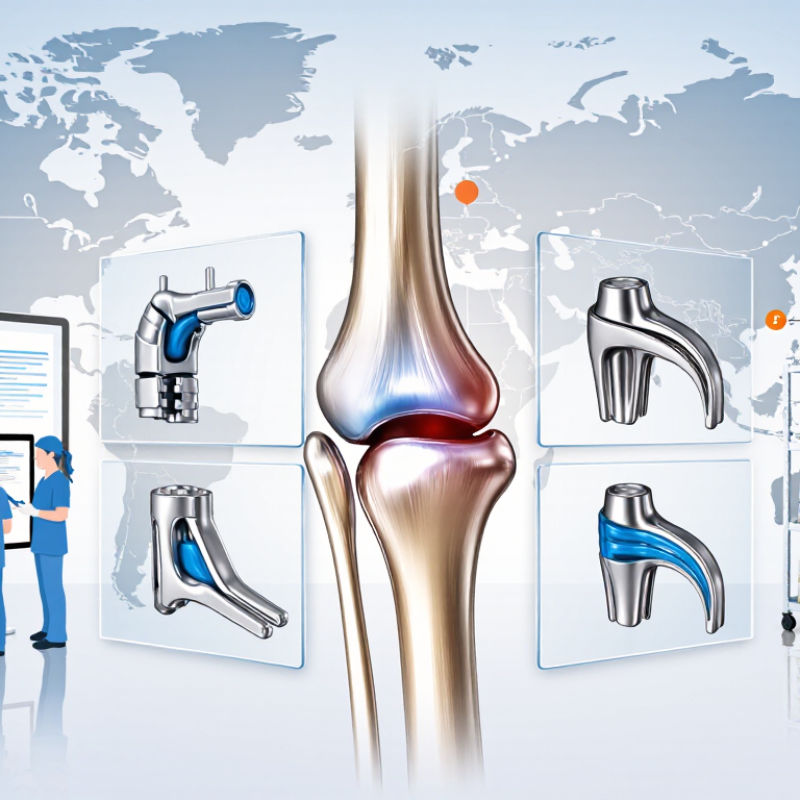
Top Constrained Knee Solutions for Global Buyers

Understanding Constrained Knee Solutions and Their Clinical Purpose

Constrained knee solutions are designed for cases where ordinary knee implants cannot provide enough stability. They may be considered when ligaments are damaged, absent, or unable to balance the joint. Severe deformity, revision surgery, and certain bone-loss patterns can also influence the decision. In practice, surgeons review imaging, ligament function, bone quality, alignment, and the patient’s activity level before selecting a constraint level.

The clinical purpose is controlled stability. A constrained mechanism can guide movement when the knee cannot maintain alignment independently. This support may reduce abnormal translation during walking, standing, or turning. However, greater constraint also transfers more force to the implant and surrounding bone. It is not automatically the stronger or better option. The least constraint that safely restores function is often preferred.

Patient history matters. So does surgical technique. A careful team checks compatibility, fixation methods, material documentation, sterilization records, and regulatory approval for the target market. Global buyers should request clear clinical evidence and traceability documents, not rely only on product descriptions. No system removes every uncertainty. Ligament behavior, bone healing, and rehabilitation can vary more than expected. That reality deserves honest discussion during consent and procurement.


Key Types of Constrained Knee Implants and Their Design Features

Constrained knee implants help restore stability when ligaments or bone cannot provide enough support. Their designs differ in how much movement they control.

Semi-constrained systems allow limited varus-valgus motion while guiding the knee through flexion. They may suit moderate ligament deficiency and preserve more natural movement.

Highly constrained implants use deeper tibial geometry and stronger post-cam structures. These features resist side-to-side translation and excessive rotation.

Hinged designs connect the femoral and tibial components mechanically. They can manage severe instability, major bone loss, or revision cases. Rotating hinges add axial rotation, which may reduce stress at the implant-bone interface. However, added constraint can increase forces on fixation points. More control is not always better.

Tips:

Compare the implant’s constraint level, hinge mechanism, fixation method, and available sizes. Ask for test data, sterilization details, material specifications, and traceability records. Confirm compatibility with the surgeon’s planned technique and the patient’s bone condition. Global buyers should review regulatory documentation for each target market. Packaging must protect sterile barriers during long-distance transport. Small details matter. Terminology can vary between suppliers, so written specifications deserve careful review. A practical weakness is that catalog descriptions may simplify complex motion behavior. Independent clinical evidence and experienced orthopedic consultation remain important before procurement.

Patient Assessment and Selection Criteria for Global Buyers

Top Constrained Knee Solutions for Global Buyers

Patient assessment should guide every constrained knee decision, not product availability. An orthopedic team reviews pain, deformity, ligament function, bone quality, and previous operations. Standing radiographs show alignment and bone loss. Additional imaging may clarify hidden defects. A useful starting point.

The patient’s age, activity level, neurological status, and expectations also matter. A constrained design may support an unstable knee, but it cannot correct poor rehabilitation or untreated infection. Surgeons should assess skin condition, circulation, diabetes control, and medication risks before scheduling surgery. Laboratory tests can help exclude infection, although no test is perfect.

Selection should match the patient’s anatomy and the surgeon’s experience. Buyers should verify material specifications, sterilization records, regulatory clearance, and traceability in the destination market. Local standards differ, and translated technical documents may still create confusion. Care teams need compatible instruments, trained staff, and a realistic plan for follow-up.

Patient consent must explain possible stiffness, loosening, wear, infection, and revision surgery. It should also describe expected mobility without promising a normal knee. This conversation is easy to rush. That is a weakness. Global buyers should compare clinical evidence, supplier responsiveness, revision support, and total care costs, rather than focusing only on the initial price. A careful assessment may exclude a constrained solution, and that can be the safer decision.

Surgical Techniques, Compatibility, and Regulatory Considerations

Constrained knee solutions serve patients with ligament loss, severe deformity, or revision needs. Their higher constraint can improve stability, but it also increases stress at the bone-cement and implant interfaces. Surgical planning should match constraint level to the patient’s anatomy, soft-tissue balance, and remaining bone stock. The National Joint Registry’s 21st Annual Report tracks more than 3.5 million hip and knee procedures, showing why long-term registry evidence matters for purchasing decisions. Large datasets reveal failure patterns that small trials may miss.

Compatibility requires more than matching dimensions. Buyers should verify femoral and tibial geometry, fixation options, polyethylene inserts, stem extensions, and instrument availability. Computer-assisted or robotic techniques may improve alignment consistency, yet they cannot replace careful ligament assessment. Surgeons should confirm whether revision components share compatible interfaces. A small mismatch can create intraoperative delays. It happens.

Tips: Request published survivorship data, radiographic evidence, and revision indications. Check whether reported outcomes apply to primary or revision surgery. Review sterilization instructions, MRI labeling, and local implant-traceability requirements. Regulatory pathways also differ. In the United States, classification and clearance may involve FDA 510(k) requirements; European procurement must consider EU Medical Device Regulation certification, clinical evidence, and post-market surveillance. Reports from the FDA and European regulators emphasize documentation quality, not marketing language. Global buyers should involve surgeons, biomedical engineers, and regulatory specialists early. No checklist catches every problem, and that limitation deserves honest discussion.

Top Constrained Knee Solutions for Global Buyers - Surgical Techniques, Compatibility, and Regulatory Considerations

Solution Type Typical Constraint Level Common Surgical Indications Typical Surgical Technique Key Compatibility Requirements Main Advantages Principal Limitations Global Regulatory Considerations
Posterior-Stabilized (PS) Knee Moderate; substitutes for the posterior cruciate ligament Primary osteoarthritis or revision cases with an incompetent posterior cruciate ligament but generally adequate collateral ligaments Femoral and tibial bone preparation with a cam-and-post mechanism; posterior cruciate ligament is usually resected Requires functional medial and lateral collateral ligaments, acceptable bone stock, and compatibility between femoral, tibial, and bearing components Predictable flexion mechanics; widely used instrumentation and surgical familiarity Not suitable for major coronal-plane instability or severe ligament deficiency; post wear and patellar complications remain clinical considerations Exact device classification depends on jurisdiction, intended use, materials, and design. Importers commonly require technical documentation, clinical evidence, labeling, and post-market surveillance arrangements
Deep-Dish or Ultracongruent Knee Moderate; increases anterior-posterior conformity without a mechanical post-and-cam Cases requiring additional sagittal stability when the posterior cruciate ligament is deficient or its function is uncertain Conforming polyethylene insert is used with compatible femoral and tibial components; soft-tissue balancing remains essential Collateral ligament stability, adequate flexion-extension gap balance, and matching insert geometry are required Avoids a traditional cam-and-post; may provide useful stability with fewer interlocking mechanisms Provides less varus-valgus constraint than a constrained condylar or hinge design; excessive conformity may increase contact stresses Regulatory submissions should identify the intended level of constraint, load-bearing conditions, material specifications, and relevant mechanical and wear testing
Constrained Condylar Knee (CCK) High; provides increased varus-valgus and rotational stability while retaining some joint motion Revision arthroplasty, moderate collateral ligament insufficiency, bone loss, instability, or deformity that cannot be reliably managed with a standard design Often uses intramedullary stems, augments, cones, sleeves, or modular blocks to restore alignment and compensate for bone deficiency Requires compatible femoral and tibial components, appropriate stem offsets, augment geometry, joint-line management, and sufficient remaining bone for fixation Balances increased stability with more physiological motion than a fully hinged construct; modularity supports complex revision planning Higher constraint can increase interface forces and fixation demands; may require more bone preparation and specialized revision instruments Buyers should verify clearance for the complete construct, not only individual components, and confirm approved combinations, sterilization status, shelf life, and traceability requirements
Rotating-Hinge Knee Very high; mechanically links femoral and tibial components while allowing controlled rotation Severe ligament deficiency, major revision, complex instability, substantial bone loss, tumor reconstruction, or selected salvage procedures Typically involves extensive bone preparation, long stems, modular augments or cones, and careful management of the joint line and extensor mechanism Requires a complete compatible hinge assembly, correct axle and bushing interfaces, suitable stem fixation, and adequate soft-tissue coverage Provides dependable mechanical stability when collateral ligaments cannot function; rotating mechanisms can reduce torsional transfer compared with fixed hinges Greater surgical complexity, higher fixation demands, potential for mechanism wear or breakage, and limited suitability for routine primary cases Regulatory review generally requires detailed evidence for fatigue strength, range of motion, wear, locking security, modular connections, and long-term clinical performance
Fixed-Hinge or Linked Knee Maximum mechanical constraint Rare salvage situations with extreme instability or insufficient soft-tissue control where a rotating-hinge design is not clinically appropriate Highly specialized revision technique with extensive bone preparation, robust fixation, and careful assessment of soft-tissue coverage Complete linked articulation, secure locking hardware, compatible stems and augments, and sufficient bone and soft tissue for reconstruction Maximum resistance to coronal and sagittal instability in selected limb-salvage procedures High stress transfer to bone and fixation interfaces; restricted physiological motion and limited use in routine arthroplasty Purchasers should request jurisdiction-specific authorization, risk-management files, clinical indications, mechanical test summaries, and validated instructions for assembly and implantation
Custom or Patient-Specific Constrained Reconstruction Case-dependent; may range from constrained condylar to hinged Severe bone loss, unusual anatomy, tumor-related reconstruction, multiple failed revisions, or anatomy not adequately served by available standard components CT-based planning, digital templating, patient-specific cutting or reconstruction guides, and multidisciplinary review are commonly required Requires validated imaging protocols, accurate patient-data transfer, dimensional verification, implant-guide compatibility, and a documented manufacturing change-control process Can address unusual defects and improve preoperative planning when standard modular options are insufficient Longer planning and production timelines, limited inventory flexibility, and additional verification of fit, sterility, and manufacturing quality Custom-made, patient-matched, and standard devices may follow different legal pathways. Buyers must confirm local requirements for design records, clinical justification, labeling, patient-specific documentation, and import authorization
Buyer Due-Diligence Checklist: Confirm intended use and constraint level; verify complete component compatibility; review fixation options and instrument availability; request evidence of sterilization validation, packaging integrity, shelf-life testing, biocompatibility, mechanical testing, clinical evaluation, unique device identification or traceability, complaint handling, and post-market surveillance. In the United States, the applicable pathway may commonly involve Class II device controls and premarket notification, while European Union access generally requires conformity assessment under the Medical Device Regulation. Requirements vary by product configuration, risk classification, intended use, and destination market.

Comparing Suppliers, Quality Standards, Costs, and Aftercare Support

For global buyers, constrained knee solutions require more than a low purchase price. These implants support patients with significant ligament instability or complex revision needs. Supplier evaluation should begin with documented clinical experience, qualified engineering teams, and transparent production records. Ask for evidence of quality systems, material testing, sterilization validation, and batch traceability. ISO 13485 certification is useful, but it should not replace regulatory review.

Quality standards affect both safety and long-term costs. Buyers should check whether the device meets applicable market requirements and whether technical files are available for inspection. Important details include alloy composition, polyethylene performance, wear testing, packaging integrity, and instrument compatibility. Small documentation gaps can delay customs clearance or hospital approval. That happened in one procurement review. We focused too heavily on specifications and missed training support.

Pricing should include implants, instruments, freight, import duties, surgeon education, and replacement components. A cheaper initial quote may become expensive when spare parts arrive slowly. Aftercare support matters greatly. Reliable suppliers provide surgical guidance, handling instructions, complaint channels, and prompt investigation of suspected device issues. Local technical representatives can reduce operating-room delays. Response times should be written into the purchasing agreement. Still, no supplier can replace careful patient selection and surgeon judgment. Buyers should compare published evidence with local clinical needs, not rely on polished sales material alone. True confidence develops through audits, surgeon feedback, and consistent follow-up data.

volume-unmute-yellow-icon volume-unmute-blue-icon