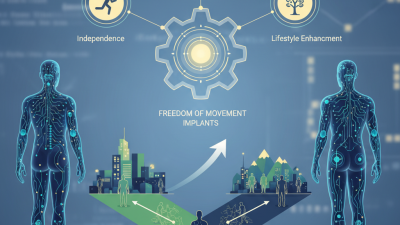
Why Patient Focused Implant Design Matters to Global Buyers?

Patient-focused implant design is becoming a practical priority for global healthcare buyers, not merely a marketing phrase. Hospitals now assess implants through several lenses: clinical outcomes, revision risk, surgical efficiency, patient mobility, and long-term value. The American Joint Replacement Registry’s 2024 Annual Report, covering millions of hip and knee procedures, demonstrates the importance of large-scale, real-world surveillance. Its evidence reminds procurement teams that product quality must extend beyond the operating room.

Patient needs are highly specific. A younger patient may expect demanding movement, while an older patient may prioritize stability and pain reduction. Implant geometry, fixation, materials, instrumentation, and digital planning can influence these experiences. The U.S. Food and Drug Administration also emphasizes patient preference information in medical-device evaluation, supporting more transparent decisions that reflect lived outcomes. Small design details matter. A smoother edge, clearer sizing, or more intuitive surgical guide can change confidence during recovery.

Dr. William J. Mayo, a surgical pioneer whose principles continue to influence implant development, stated: “The best interest of the patient is the only interest to be considered.” That standard remains powerful, although modern design sometimes falls short. Global buyers should question attractive claims, compare registry evidence, and examine outcomes across different populations. Patient-focused implant design should connect engineering decisions with measurable patient benefit. It should also account for training, affordability, supply reliability, and follow-up care. The industry still has work to do. Better implants are not defined by complexity alone, but by how naturally they serve real people.

Why Patient Focused Implant Design Matters to Global Buyers?

Global Need: WHO Estimates 3.5 Billion People Have Oral Diseases

WHO estimates that 3.5 billion people live with oral diseases, according to its Global Oral Health Status Report 2022. Untreated dental caries affects about 2 billion permanent teeth, while severe periodontal disease affects roughly 1 billion people. These figures describe need, not automatic implant demand. Many patients still require prevention, restoration, or affordable removable solutions.

For global buyers, patient-focused implant design begins with this uneven clinical reality. A narrow ridge, limited bone, diabetes, smoking history, or delayed care can change treatment planning. Design should support predictable placement, cleanable contours, and practical prosthetic maintenance. The WHO report also highlights major access gaps, especially in low- and middle-income settings. An implant requiring expensive equipment or advanced training may be technically impressive, yet difficult to use responsibly.

Clinical evidence should guide purchasing decisions. ITI Consensus Conference reports emphasize patient selection, risk assessment, maintenance, and long-term follow-up. Buyers should request data on survival, peri-implant disease, surface performance, and complications. Promotional success rates are not enough. Small details matter: a patient cleaning around an implant, a clinician adjusting emergence profiles, and a service team answering questions years later. We often treat global healthcare as one market. That assumption can fail. Transparent data makes failure safer.
Patient Risk: Peri-Implantitis Is Reported in About 20–45% of Patients

Why Patient Focused Implant Design Matters to Global Buyers?

Patient Risk: Peri-Implantitis Is Reported in About 20–45% of Patients

Peri-implantitis is not a minor maintenance issue. It can involve bleeding, deepened pockets, bone loss, and eventual implant instability. Reported rates vary widely, but professional reviews commonly place peri-implantitis near 20–45% of patients. Derks and Tomasi’s 2015 systematic review reported approximately 22% patient-level prevalence. The 2017 World Workshop also highlighted inconsistent case definitions and follow-up periods.

These figures should influence global purchasing decisions. A patient-focused implant design should support stable soft-tissue adaptation and easier plaque control. Thread shape, surface characteristics, emergence profile, and prosthetic access all matter. So does the clinician’s ability to monitor the implant during routine visits. No design removes biological risk completely. That is an uncomfortable truth. Yet, selecting systems that support cleaning and long-term assessment may reduce avoidable complications.

Tips: Ask suppliers for independent clinical evidence, not only laboratory results. Check follow-up periods, patient numbers, and peri-implantitis definitions. Review how the design supports hygiene around the restoration. Confirm whether maintenance instructions are practical for different healthcare settings. Buyers should also examine training requirements, because a technically advanced design may fail when daily clinical workflows are unclear. Data can guide the decision, but real-world usability deserves equal attention.

Why Patient-Focused Implant Design Matters to Global Buyers

Patient risk focus: peri-implantitis is reported in approximately 20–45% of patients, depending on the case definition, population, and follow-up period.

Patient-Centered Dimension Evidence-Based Data Point Why It Matters Clinically Design and Procurement Implication
Peri-implantitis prevalence Approximately 20–45% of patients have been reported as affected in studies using different diagnostic criteria and follow-up periods. The reported rate is not a single universal value. Disease frequency changes according to probing thresholds, radiographic bone-loss criteria, patient characteristics, and observation time. Global buyers should evaluate systems using clearly defined clinical endpoints, standardized maintenance protocols, and transparent long-term evidence rather than prevalence claims alone.
History of periodontitis Higher-risk patient group. Previous periodontal disease is consistently associated with increased risk of peri-implant disease and implant loss. Patients with a history of periodontitis may have persistent susceptibility to inflammation, biofilm accumulation, and progressive tissue breakdown. Prioritize implant solutions that support accessible cleaning, stable soft-tissue management, and structured periodontal screening before and after treatment.
Smoking and tobacco exposure Established risk factor. Smoking is associated with impaired healing and a greater likelihood of peri-implant complications. Tobacco exposure can adversely affect vascularization, immune response, osseointegration, and maintenance outcomes. Patient-focused systems should be compatible with conservative surgical planning and risk-based recall programs. Product selection should not replace smoking-cessation support.
Diabetes and metabolic control Risk depends on glycemic control. Poorly controlled diabetes is associated with impaired healing and increased inflammatory risk. Metabolic status can influence wound healing, infection susceptibility, and the predictability of implant therapy. Buyers should seek clinical protocols addressing medical screening, healing assessment, maintenance, and coordination with the patient’s healthcare providers.
Biofilm and plaque accumulation Primary modifiable driver. Plaque-induced inflammation around implants can progress from peri-implant mucositis to peri-implantitis. Rough, inaccessible, or poorly contoured surfaces may make daily hygiene and professional debridement more difficult. Favor designs with cleanable emergence profiles, smooth or polished transmucosal areas where clinically appropriate, and geometry that supports instrument access.
Prosthetic excess cement Residual cement is a recognized local risk factor, particularly when margins are positioned deep below the soft-tissue margin. Retained cement can act as a plaque-retentive irritant and may be difficult to detect or remove. Consider restorative workflows that improve margin visibility, cement control, retrievability, and verification of complete cement removal.
Implant position and restorative contour Three-dimensional implant position, tissue thickness, inter-implant spacing, and overcontoured restorations influence hygiene access and tissue stability. Inadequate spacing or bulky contours may compromise cleansability and increase local inflammatory challenges. Specify systems and components that support accurate planning, prosthetically driven placement, appropriate emergence profiles, and patient-specific customization.
Diagnosis and monitoring Peri-implant health assessment commonly includes probing, bleeding or suppuration evaluation, plaque assessment, and comparison of radiographic bone levels over time. A baseline taken after prosthesis delivery and regular supportive care improve the chance of detecting disease progression early. Global procurement should include compatible components, documentation, probing access, radiographic reproducibility, and training for consistent follow-up.
Supportive maintenance Regular professional maintenance and effective home care are central to controlling peri-implant inflammation; recall intervals should be individualized by risk. Implant therapy is a long-term care pathway, not a one-time procedure. Early mucositis management may help prevent progression. Assess the complete care ecosystem: hygiene compatibility, maintenance instruments, clinician training, patient instructions, and availability of long-term support.
Patient-reported priorities Patients commonly value comfort, function, aesthetics, confidence, treatment time, affordability, and a low-maintenance daily routine. Clinical success must be aligned with the patient’s ability to clean, attend recalls, understand risks, and maintain the restoration over time. Use patient-centered informed consent and select solutions that balance biological safety, usability, durability, serviceability, and total cost of care.
Interpretation note: Peri-implantitis prevalence estimates vary substantially because studies use different definitions, patient populations, implant systems, and follow-up durations. The 20–45% range should therefore be interpreted as a reported evidence range, not as a fixed risk for every patient. Individual risk assessment and ongoing professional maintenance remain essential.

Design Standards: ISO 10993 Guides Biological Safety Evaluation

Patient-focused implant design begins with understanding how a device will meet real human tissue. ISO 10993 provides a structured framework for evaluating biological safety. It considers the implant’s materials, manufacturing process, contact type, and contact duration. A short-term tissue contact creates different concerns than a permanent implant.

Global buyers often examine more than a test report. They look for a documented biological evaluation plan, clear material specifications, and traceable manufacturing records. Chemical characterization can identify substances that biological tests may not reveal. Toxicological assessment then helps determine whether detected compounds present meaningful patient risks. Testing should support a risk-based rationale, not simply complete a checklist.

In practical reviews, small process changes can matter. A cleaning agent, surface treatment, or packaging material may alter the final biological profile. This detail is easy to miss. Design teams should reassess biological safety when materials, suppliers, or production conditions change. The evaluation should also match the intended anatomical location and clinical use.

There is no perfect shortcut.

Experienced reviewers may still find uncertainty, especially when degradation products or long-term tissue responses are difficult to predict. That uncertainty should be recorded honestly, investigated with suitable evidence, and discussed with qualified regulatory professionals. ISO 10993 guides the evaluation, but sound judgment remains essential for protecting patients and supporting reliable international procurement.

Why Patient-Focused Implant Design Matters to Global Buyers

Design Standards: ISO 10993 Guides Biological Safety Evaluation

ISO 10993-1 classifies medical-device contact duration as limited, prolonged, or permanent. These categories help global buyers assess whether an implant’s biological safety program is proportionate to the patient’s exposure time. The permanent-contact category is shown at the 30-day boundary because ISO 10993-1 defines it as contact exceeding 30 days.

Clinical Evidence: Dental Implants Often Show 90–95% Ten-Year Survival

Why Patient Focused Implant Design Matters to Global Buyers?

Clinical studies commonly report 90–95% ten-year survival for dental implants. This figure is encouraging, but it needs careful interpretation. Implant survival usually means the implant remains in function. It does not always mean perfect comfort, ideal bone levels, or complete patient satisfaction. The number can mislead.

Patient-focused design considers more than placement day. Surface characteristics, implant geometry, connection stability, and prosthetic flexibility can influence clinical handling. A clinician also needs predictable insertion in different bone conditions. For a patient, small design choices may affect cleaning access, chewing comfort, and future maintenance. These details matter across regions, where training, equipment, and follow-up systems vary.

Evidence should guide purchasing decisions. Buyers can examine peer-reviewed studies, follow-up periods, patient selection, and reported complications. A ten-year result from one clinical setting may not apply to every population. Smoking, diabetes, poor hygiene, limited bone volume, and irregular reviews can change outcomes. Real patients are less tidy than research tables.

I would not treat 90–95% as a promise. It is a benchmark requiring responsible case planning, clear instructions, and continuing professional support. Global buyers should also assess documentation, regulatory compliance, traceability, and whether clinicians can manage complications locally. Patient-centered design earns trust when its advantages remain visible years after treatment, not only during the initial procedure.

Global Buying Criteria: FDA, CE, and ISO Requirements Shape Selection

Patient-focused implant design matters because global buyers assess evidence, not appearance. A comfortable geometry, clear sizing, and predictable insertion can reduce avoidable clinical friction. Yet procurement begins with regulatory fit. In the United States, FDA clearance or approval depends on the device’s classification and pathway. A 510(k) submission needs substantial equivalence, while higher-risk implants may require stronger clinical evidence. The FDA’s FY2023 MDUFA Performance Report shows how review times and information requests affect launch planning.

In Europe, CE marking under the Medical Device Regulation requires conformity assessment, technical documentation, clinical evaluation, and post-market surveillance. The European Commission’s 2024 MDR implementation update highlights continuing pressure on notified-body capacity and transition timelines. That pressure can change availability, even when a design is clinically attractive. MedTech Europe’s 2024 industry figures describe more than 500,000 medical technologies across Europe, showing the scale of buyer comparison.

ISO 13485:2016 does not authorize sales. It tests whether design controls, risk management, supplier oversight, and corrective actions operate consistently. The ISO Survey 2023 recorded 31,987 ISO 13485 certificates worldwide. That number signals broad adoption, not automatic product quality. Buyers should connect ISO records with implant-specific evidence, sterilization validation, packaging integrity, and usability testing. A certificate can look reassuring. It can still hide weak clinical reasoning. Procurement teams should ask whether patient anatomy, revision scenarios, and local follow-up capacity shaped the design.

volume-unmute-yellow-icon volume-unmute-blue-icon