
Companies


Browse products by medical specialities area or therapies

Arthroplasty
Product by Therapies
Product by Type
Sports Medicine
Product by Therapies
Knee Portfolio - ACL /PCL Reconstruction
Knee Portfolio - Meniscus Repair
Shoulder Portfolio - Bankart/Slap Repair
Shoulder Portfolio - Rotator Cuff Repair
Product by Type


Choosing among the top 10 types of Red Light Therapy Panel can feel surprisingly technical. Panels differ in wavelength, irradiance, treatment area, cooling systems, controls, and mounting options. A compact desktop model may suit facial routines, while a full-body panel can illuminate the shoulders, back, and legs in one session. The details matter.
Michael R. Hamblin, PhD, a widely cited photobiomodulation researcher, described the field as “the use of non-ionizing forms of light sources, including lasers and light-emitting diodes, in the visible and near-infrared electromagnetic spectrum.” This definition explains why wavelength deserves careful attention. Red light commonly targets surface exposure, while near-infrared light is designed for deeper penetration. However, deeper does not automatically mean better.
Not every bright panel is a quality panel. Some devices advertise impressive power figures without explaining measurement distance or testing conditions. That is a problem. A trustworthy buying guide should examine independent safety information, warranty coverage, electromagnetic compatibility, eye-protection guidance, and realistic treatment instructions. It should also distinguish laboratory evidence from personal testimonials.
This overview compares ten practical panel categories, including tabletop, half-body, full-body, foldable, wall-mounted, modular, and travel-friendly designs. Each type has trade-offs involving cost, space, comfort, session consistency, and maintenance. I have included useful buying criteria, but the categories are not perfectly separate. Some products overlap.
Your skin, schedule, room size, and health history should influence the decision. Red light therapy is not a substitute for professional medical care. A cautious purchase may be less exciting, yet it can be more reliable over time.
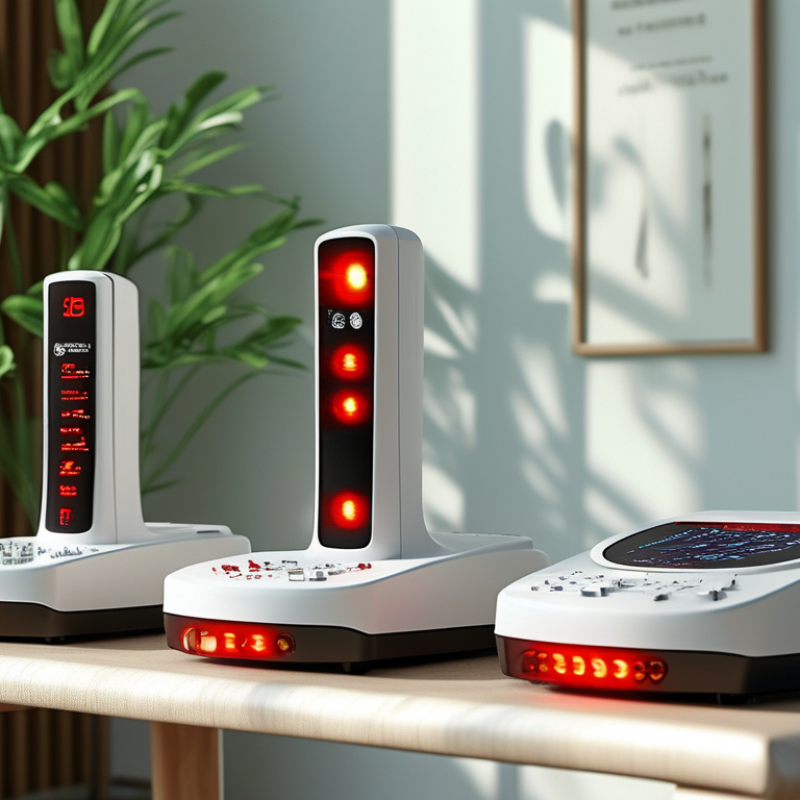
Red light therapy panels differ by wavelength, coverage, power, and control options. The core specifications are usually 630–660 nm red light and 810–850 nm near-infrared light. Red wavelengths mainly target superficial tissue. Near-infrared light penetrates more deeply, although penetration varies with skin, distance, and tissue thickness.
A 2023 review in Photobiomodulation, Photomedicine, and Laser Surgery found that outcomes depend on wavelength, irradiance, dose, and treatment timing. More power is not automatically better. That matters when comparing the top 10 panel types. A narrow 630 nm panel may suit facial use, while a mixed 660 nm and 850 nm panel offers broader body coverage. Dual-band panels are convenient, but their output should be independently measured.
Check irradiance at the stated treatment distance, not only at the panel surface. Some industry analyses, including Grand View Research’s 2024 light therapy report, identify home-use devices as a fast-growing segment, but market growth does not prove clinical effectiveness. Look for wavelength accuracy, cooling performance, eye-protection guidance, and published testing. Keep records of exposure time and skin response. Results can be subtle.
The research is promising.
However, protocols remain inconsistent. Some studies use different doses, distances, and schedules, making direct comparisons difficult. A panel with impressive specifications may still perform poorly if its measurements lack third-party verification.
| No. | Panel Type | Typical Size and Coverage | Common Wavelength Configuration | Typical Irradiance Range* | Best Suited For | Key Advantages | Important Buying Considerations |
|---|---|---|---|---|---|---|---|
| 1 | Compact Desktop Panel Targeted Use | Approximately 20–40 cm high; suitable for the face, neck, hands, or a small treatment area. | Red: 630–660 nm Optional NIR: 810–850 nm | About 20–80 mW/cm² at the stated treatment distance. | Facial skincare routines, small joints, hands, and localized areas. | Low space requirement, generally easier to position, and often more affordable than larger formats. | Coverage is limited. Confirm the measured irradiance at the distance you will actually use rather than relying only on LED wattage. |
| 2 | Vertical Half-Body Panel Versatile | Approximately 60–100 cm high; typically covers the torso or one side of the body. | Red: 630–660 nm NIR: 810–850 nm | About 30–100 mW/cm² at the treatment surface. | Upper-body, lower-body, back, legs, and general wellness sessions. | Balances coverage, price, portability, and power consumption. | A stand or wall-mount option may be useful. Check whether the panel can be used vertically or horizontally. |
| 3 | Full-Body Vertical Panel Large Coverage | Approximately 120–180 cm high; designed to illuminate most of the front or back of the body. | Red: 630–660 nm NIR: 810–850 nm | About 30–100 mW/cm², depending on distance and panel design. | Users seeking efficient whole-body positioning without a multi-panel setup. | Reduces repositioning and can provide more consistent body coverage in one session. | Requires more floor space. Review cooling, electrical safety, mounting stability, and session controls. |
| 4 | Multi-Panel Full-Body Array Modular | Two or more linked panels covering the front, back, or both sides of the body. | Red: 630–660 nm NIR: 810–850 nm Independent wavelength controls may be available. | About 30–120 mW/cm² per panel at the specified distance. | Large-area routines, athletic recovery programs, and users who want adjustable coverage. | Highly configurable and can offer front-and-back coverage with fewer repositioning breaks. | More expensive and heavier than a single panel. Confirm synchronization, total power draw, and heat management. |
| 5 | Foldable or Flexible Panel Portable | Foldable construction; coverage varies from a small body section to a broad wraparound area. | Red: 630–660 nm NIR: 810–850 nm | About 10–80 mW/cm², depending on material, distance, and LED layout. | Travel, home use, irregular body contours, and users with limited storage space. | Easy to store and transport; flexible construction may conform more closely to curved areas. | Inspect cable strain relief, heat buildup, cleaning requirements, and whether the flexible surface can be positioned safely. |
| 6 | Face and Neck Panel Skincare Focus | Usually shaped to cover the face, jawline, and neck; may be tabletop-mounted or wearable. | Red: 630–660 nm Optional NIR: 810–850 nm | About 10–60 mW/cm² at the face, depending on design and fit. | Cosmetic skincare routines and localized facial treatment. | Purpose-built positioning, compact storage, and commonly shorter treatment areas. | Look for eye-protection guidance, comfortable fit, even light distribution, and clear instructions for use near the eyes. |
| 7 | Targeted Spot Panel Localized | Small light source intended for a specific area such as a knee, shoulder, elbow, or hand. | Red: 630–660 nm NIR: 810–850 nm | About 20–100 mW/cm² at the recommended distance. | Localized areas where a large panel would be impractical. | Easy to aim and reposition; typically consumes less electricity than large panels. | Small coverage may require multiple placements. Use the manufacturer’s distance and timing guidance to avoid excessive exposure. |
| 8 | Mounted Wall Panel Fixed Position | Medium to large panel installed on a wall or door-mounted support system. | Red: 630–660 nm NIR: 810–850 nm | About 30–100 mW/cm² at the planned standing or seated distance. | Dedicated home treatment areas and repeatable positioning. | Stable placement, less setup time, and consistent distance between sessions. | Installation must support the panel’s weight. Leave adequate ventilation space and ensure controls remain accessible. |
| 9 | Stand-Mounted Adjustable Panel Position Adjustable | Medium or large panel on a height-adjustable floor stand; coverage depends on panel dimensions. | Red: 630–660 nm NIR: 810–850 nm | About 30–100 mW/cm² at the selected distance. | Users who want to treat different body areas while seated, standing, or lying down. | Flexible positioning without permanent installation; useful for shared household use. | Check stand stability, caster locks, height range, cable routing, and whether the panel can tilt securely. |
| 10 | Dual-Mode Red and NIR Panel Spectrum Control | Available in compact, half-body, or full-body formats with separate wavelength modes. | Red mode: 630–660 nm NIR mode: 810–850 nm Combined mode may also be available. | About 20–100 mW/cm² in total, depending on the selected mode and distance. | Users who want to select visible red light, near-infrared light, or both. | Provides wavelength flexibility and allows users to follow different treatment preferences. | Verify whether the listed irradiance applies to each wavelength separately or to the combined output. Independent controls are helpful. |


